
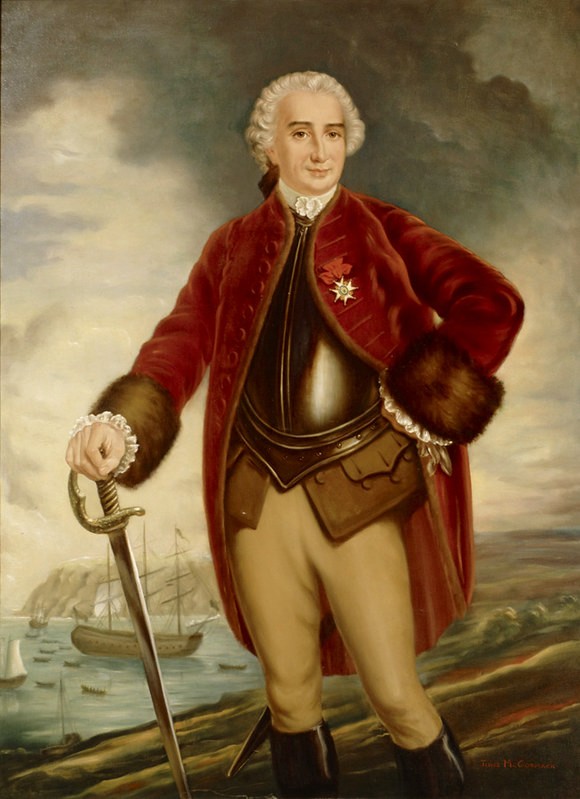
McCormack, June Forbes (1956) - Louis Joseph, Marquis de Montcalm [Oil on canvas] ©Government of Ontario Art Collection, Archives of Ontario
Louis‑Joseph, Marquis de Montcalm (1712–1759), was a French nobleman and career soldier whose disciplined command and strategic sense made him a central figure of the French defense in North America during the Seven Years’ War. Born near Nîmes, he joined the army as a young man and distinguished himself in campaigns in Europe before being appointed Commander in Chief of French forces in Canada in 1756. Montcalm quickly earned the respect of both regular troops and Canadian militia, winning significant early victories such as the capture of Fort Oswego (1756) and the defense of Fort Carillon (1758), where his outnumbered forces repelled a much larger British army.
By 1759 Montcalm faced mounting challenges—limited reinforcements, strained relations with colonial officials, and the overwhelming naval and material superiority of Britain. When James Wolfe’s forces threatened Quebec, Montcalm attempted to defend the city with the resources at hand. On 13 September 1759 he led his troops against the British on the Plains of Abraham, hoping to dislodge them before they could fully form. Mortally wounded in the battle, he died the following day, reportedly expressing relief that he would not live to see the surrender of Quebec. His leadership and resolve left a lasting legacy in French Canadian memory, where he is remembered as a symbol of courage and duty in the face of overwhelming odds.