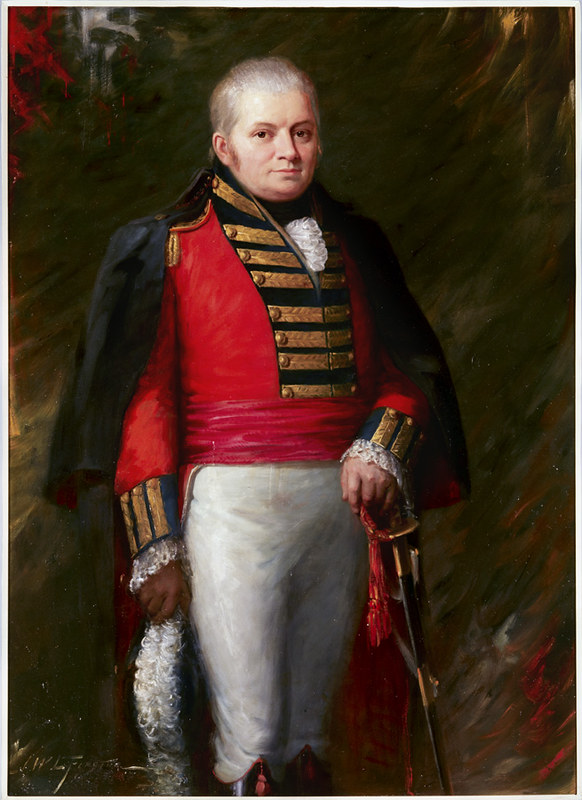
Forster, J.W.L. (ca. 1900). Colonel John Graves Simcoe [Oil on canvas] ©Government of Ontario Art Collection, Archives of Ontario
John Graves Simcoe (1752–1806) was a British army officer and statesman who became the first Lieutenant‑Governor of Upper Canada from 1791 to 1796. Born in Cotterstock, Northamptonshire, he was educated at Exeter Grammar School, Eton College, and Oxford before entering the British Army in 1770. Simcoe distinguished himself during the American Revolution, notably commanding the Queen’s Rangers from 1777 and earning promotion to lieutenant colonel. After returning to England, he entered politics and was appointed lieutenant‑governor following the Constitutional Act of 1791. In this role, he laid the institutional foundations of Upper Canada, promoting immigration, agriculture, defense, and road building while introducing British legal and administrative structures.
Simcoe is remembered for founding the town of York (now Toronto) and for advancing policies that shaped the early development of Ontario, including support for gradual abolition of slavery and implementation of English common law. Though often at odds with the governor‑in‑chief, Lord Dorchester, he pursued a vision of a stable, loyalist, and conservatively governed colony. Simcoe left Upper Canada in 1796 and later served in various military and administrative capacities, including a brief appointment as commander‑in‑chief in India before ill health forced his return to England, where he died in 1806. His legacy endures in Canadian history as a formative architect of early provincial governance.