
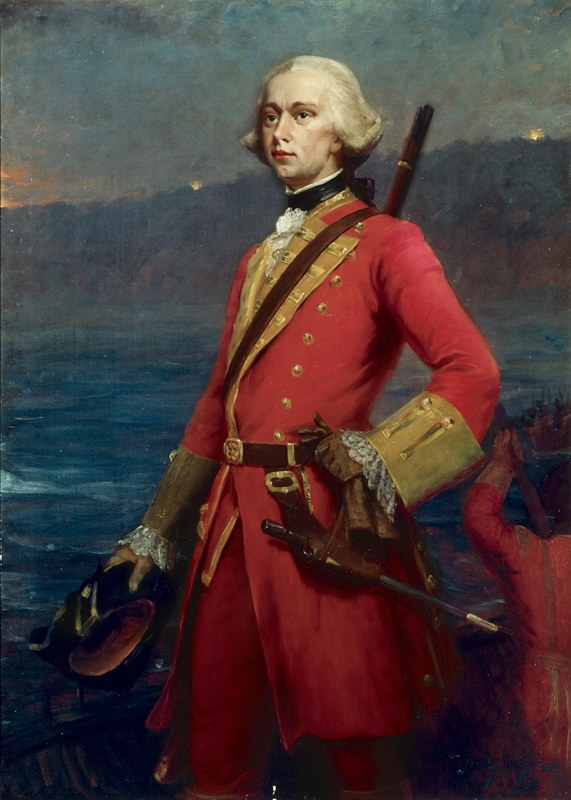
Forster, J.W.L. (1901) - Major-General James Wolfe [Oil on canvas] ©Government of Ontario Art Collection, Archives of Ontario
Major‑General James Wolfe (1727–1759) was a British Army officer whose rapid rise through the ranks stemmed from his exceptional discipline, tactical insight, and battlefield composure. Born in Westerham, Kent, he entered military service as a teenager and fought in the War of the Austrian Succession and the early campaigns of the Seven Years’ War. His performance at the 1758 Siege of Louisbourg earned him the attention of William Pitt the Elder, who selected Wolfe—still in his early thirties—to lead the British expedition against Quebec, a pivotal French stronghold in North America.
In 1759 Wolfe executed a daring campaign against Quebec’s formidable defenses, culminating in the audacious nighttime ascent of the cliffs at Anse‑au‑Foulon. On 13 September 1759 his troops formed on the Plains of Abraham, forcing a decisive battle with French forces under the Marquis de Montcalm. Wolfe was mortally wounded during the engagement but lived long enough to learn of his army’s victory, a turning point that secured British control of Canada. His death in battle elevated him to iconic status in Britain, where he became celebrated as a model of heroic sacrifice in the service of empire.