Ontario's Aboriginal Peoples
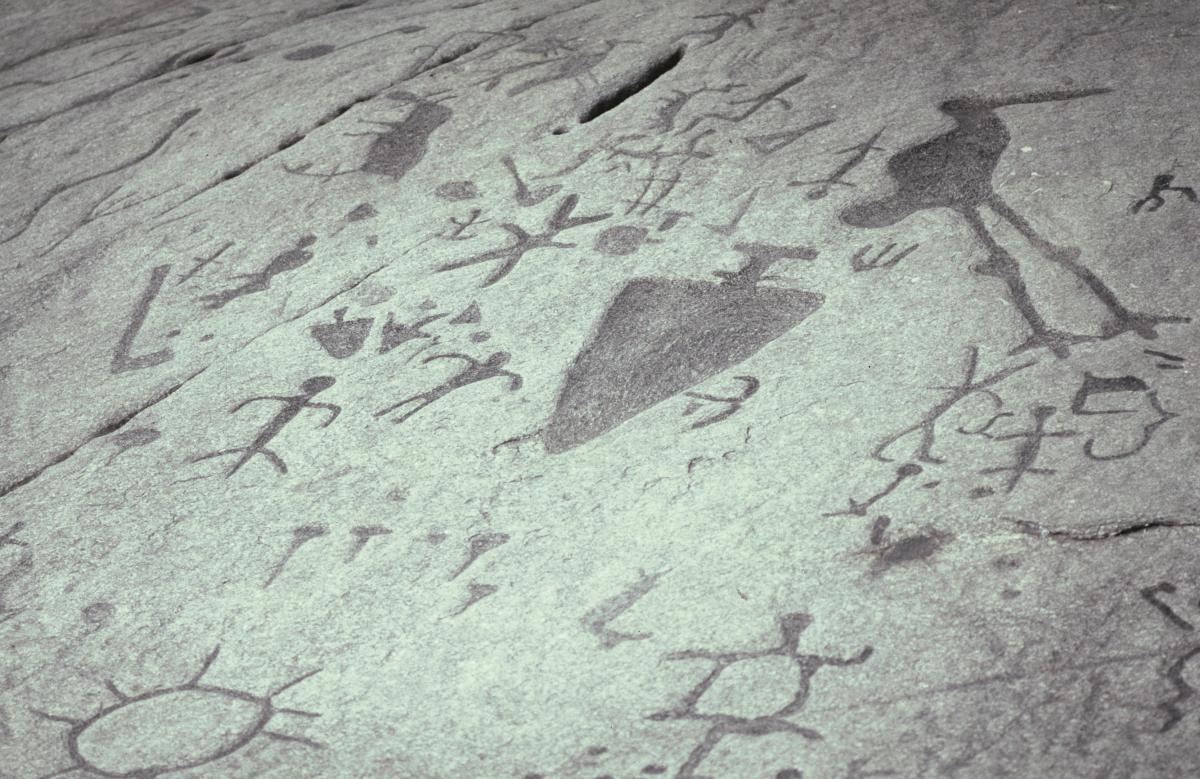
Petroglyphs, Peterborough, Ontario
© Ontario Tourism Marketing Partnership Corporation
Ontario's Aboriginal Peoples
The origins of Ontario’s Aboriginal peoples go back thousands of years before the first European settlers arrived. After countless movements, migrations, and relocations, there are several main cultural groups that make up the province’s contemporary Aboriginal communities. First Nations, Métis and Inuit are three separate peoples with distinct heritages, languages, cultural practices, and spiritual beliefs.
Most First Nations living in Ontario today fall under two broad language groups – the Algonquians and the Haudenosaunee (also called the Iroquois). Within these larger groups are unique Nations, histories and cultures. The two rooms housing Gathering Place have been re-named to reflect the two language groupings – Ninoododadiwin, “harmony” in the Ojibwe language (from the Algonquian group) and Ę dwaę na ga da:t, “we will raise our voices together in unison” in the Cayuga language (from the Haudenosaunee group). These names reflect the goal of the project, to bring diverse peoples together to build relationships and mutual understanding.
Ontario is also home to the Métis - a distinct Aboriginal people descended from the unions of European fur traders and First Nation women. Additionally, a number of Inuit people now live in Ontario, even though our province is not their traditional homeland. The word “Inuit” means “the people” in the Inuit language of Inuktitut.
Within the countless artistic traditions and techniques practiced by Ontario’s numerous Aboriginal groups, several shared threads emerge. Many of the works on display in Gathering Place highlight the relationship between art and spirituality, the relationship between Aboriginal peoples and their land, and the healing qualities of art and cultural expressions.